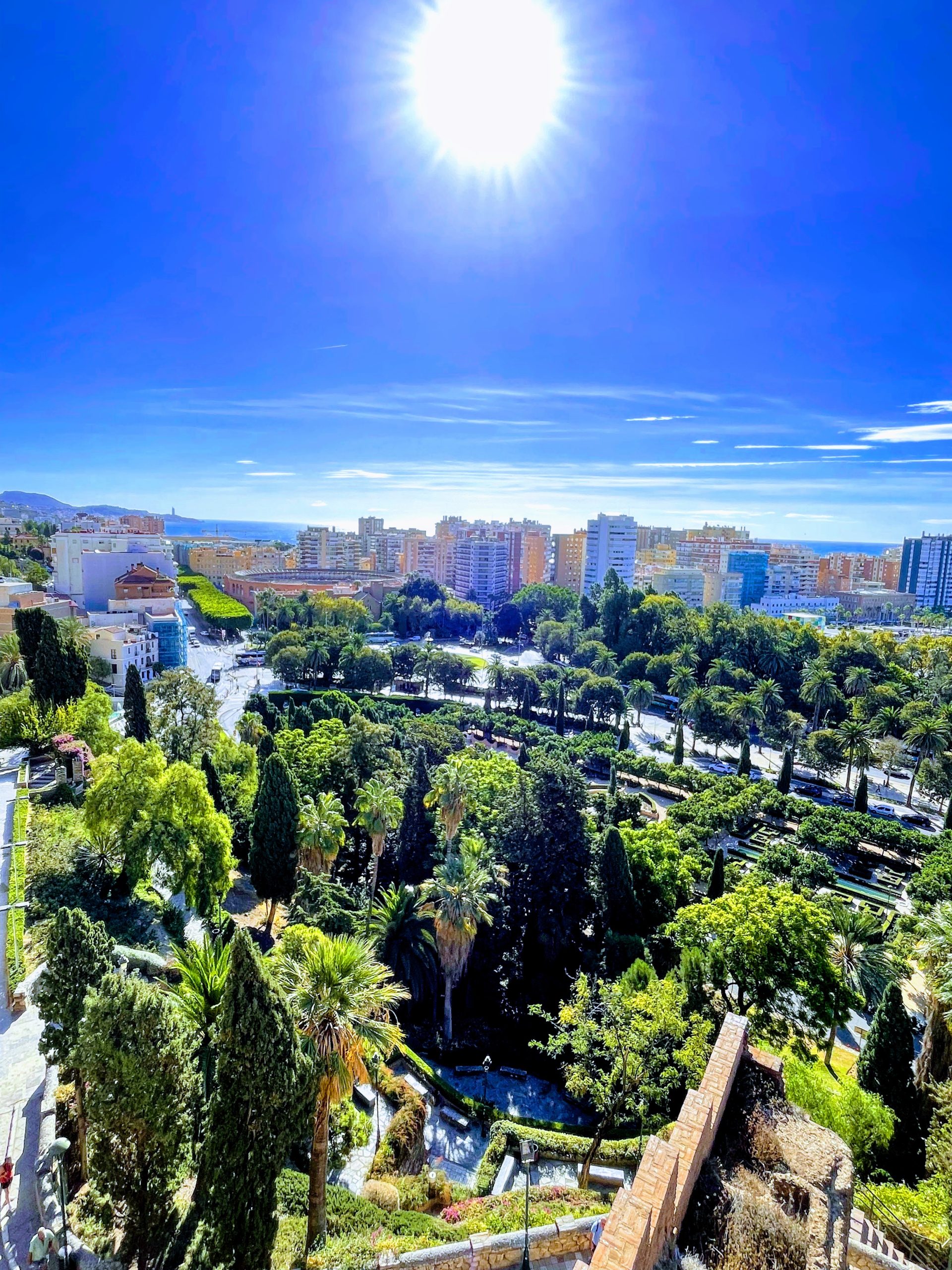
Most people land in Málaga, drop their bags near the beach, and treat the city as a two-night warm-up before Seville or Granada. That’s a mistake. Málaga has quietly become one of Spain’s most interesting cities — a working port town with more museums per capita than almost anywhere in the country, a old quarter that rewards aimless wandering, and a food scene that has nothing to prove to anyone.
We spent nine days here across two visits, and both times we left having extended our stay past what the itinerary called for. This isn’t a highlight reel — it’s what actually made the extra nights worth it.
The city rewards a slower pace than most guidebooks assume. Skip the checklist and you’ll find the version of Málaga that locals actually live in.
The Old Town Beyond the Cathedral
Everyone photographs the Cathedral’s unfinished second tower — locals call her „La Manquita,” the one-armed lady — and then heads straight for the tapas bars on Calle Larios. Fair enough, but the real texture of the Old Town is one block back, in the narrow streets around Plaza de la Merced, where Picasso was born and where the balconies are still hung with laundry rather than souvenir flags.
We spent three mornings at Mercado Central and ate better than at any restaurant.
Atarazanas Central Market is worth building a morning around: a 19th-century iron-and-glass hall full of fishmongers shouting prices, jamón stalls, and a couple of stand-up counters serving the freshest boquerones you’ll find anywhere on the coast. Get there before 10am, before the tour groups arrive.
Where to Stay
Skip the beachfront hotels in favor of the Soho district, just south of the Old Town. It’s Málaga’s arts quarter — street murals on nearly every wall, a handful of genuinely good boutique hotels, and a ten-minute walk to both the historic center and the port.
Our pick
A small design hotel two streets back from the Muelle Uno marina, with a rooftop terrace that catches the sunset over the Alcazaba. Quiet enough to sleep, close enough to walk everywhere.
Getting There and Around
Málaga’s airport is one of the best-connected in southern Spain, with direct flights from most major European hubs. From the airport, the C1 commuter train drops you at the María Zambrano station in the city center in about 12 minutes — skip the taxi line entirely.
Once you’re in, the Old Town and Soho are both entirely walkable. If you’re planning day trips to Ronda or the white villages, rent a car for just those days rather than the whole trip — parking in central Málaga is more hassle than it’s worth.
Final Thoughts
Málaga doesn’t need you to rush through it. Give it three full days minimum — enough time for the markets, the museums, a day trip to the coast, and at least one evening with no plan at all. That’s usually when the city gives you its best version.
I am not a travel agency and do not operate a registered travel business. I share travel recommendations and, where relevant, act informally as an independent advisor affiliated with Fora Travel, Inc. ("Fora").
Any advice, recommendations, or itinerary suggestions I provide are offered as personal guidance and free of charge. I do not charge you any planning fee, service fee, or booking fee.
All payments for the actual travel services — hotel stays, car rentals, tours, or any other bookings — are made directly to Fora or to the underlying service provider (e.g., the hotel or car rental company), never to me. Where I earn a commission, it is paid to me by Fora or the supplier, not by you, and does not add to the price you pay.
I have no control over, and take no responsibility for, the quality, safety, availability, or actual performance of any hotel, car rental company, tour operator, airline, or other service provider. Any complaint or issue regarding a booked service should be directed to that provider or to Fora, as applicable, and not to me.
We're not a travel agency — we're travelers who share what we know.